There are no items in your cart
Add More
Add More
| Item Details | Price | ||
|---|---|---|---|
That quiet knowing isn’t anxiety. It isn’t a phase. It’s your own intelligence pointing at a gap — between the person you’ve been performing and the person you’re actually capable of being.
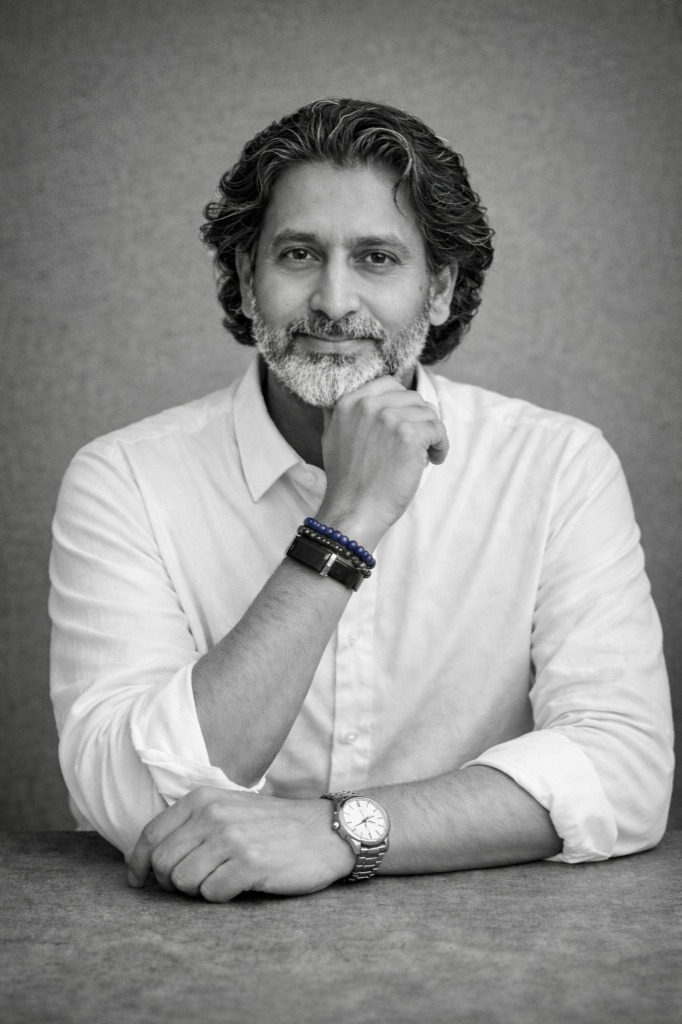
I’m Prasoon Sarkaar. I enable people to close that gap — permanently.
Which of these lands closest to the truth today?
You’ve built the career, hit the numbers. The feeling of rightness went quiet somewhere along the way. This isn’t burnout — it’s something more unsettling. And more important.
→ Personal TransformationA distance growing between you and a partner, a child, yourself. A version of you visibly running out of road. You don’t need the words for it yet.
→ Relationship & Personal TransformationA business. A second chapter. A culture that earns the word intentional. You’re constructing — and the quality of your thinking partner at this stage matters enormously.
→ Business EmpowermentThe work hasn’t changed. But I have. The version of leadership that got me here is no longer the version that will take me — and the people I’m responsible for — forward.
→ Leadership EnablingYou’ve seen the gap — in your leadership team, your high-potentials, your people navigating change. You want enabling, not just training. Someone who has lived inside organisations, not just studied them.
→ Corporate & Organisational EnablingCoaching is a powerful practice. A skilled coach — asking the right questions at the right moment — can surface something a person has been avoiding for years. That is real, and I have profound respect for what good coaching creates.
But sometimes, the questions are not the problem. Sometimes you’ve already asked yourself every question in the book. You know the answers. And yet — nothing moves. That’s the moment the work needs someone willing to stay in the room after the insight — through the resistance, through the backsliding — until the change becomes irreversible.
To help you understand why you are the way you are. Crucial work. Not mine.
The best coaches do this brilliantly. But sometimes — if the pattern is stubborn, if knowing and moving have been disconnected for too long — questions alone aren’t enough.
Until the knowing you already have translates into the life you actually live. A different contract. A different commitment. A different result.
“Coaches ask questions. Enablers unlock movement.”
I developed two interconnected frameworks because transformation has a process and a destination. Most methodologies give you one. We give you both — working simultaneously, in every engagement.
The step-by-step methodology of how we engage, what we examine, what we activate, and how we build lasting change. The road.
The six qualities we cultivate — Transform, Harness, Resilience, Inspire, Value, Empower — that tell us we’ve arrived somewhere real.
E.N.A.B.L.E.R. is the road. T.H.R.I.V.E. is the destination. Every engagement uses both — simultaneously, synergistically.
Most practitioners draw from one source — either the empirical world of neuroscience, or philosophical tradition. I draw from both, because neither is fully sufficient on its own.
I draw on the science — not as theory to recite, but as a lens that explains why certain approaches produce permanent change and others produce only temporary relief. A few concepts that shape everything I do:
What you call a fixed trait is, neurologically, a well-worn circuit. Well-worn can be rerouted. This is not optimism — this is how brains actually work, at any age.
Your mind does not rest — it replays. The same narratives, the same assumptions about what is possible. Real transformation is the practice of interrupting that loop before it runs the outcome.
Dopamine responds to progress, not to goals. Correctly sequenced movement does more than large motivating intentions. The neurochemistry of change is already built in — the question is whether we are using it.
The way you connect in your most important relationships is largely a template formed before you consciously chose it. Understanding that template is the first step to updating it — practically, not clinically.
These are not religious frameworks — I want to be unambiguous about that. They are the distilled life-wisdom of cultures that spent centuries examining what it means to be a human being navigating a complex world with integrity.
I take learnings from each — not doctrine, not ritual, but the concepts that have proven most useful across thousands of years of human experience. They emerged from different traditions — Indian, Greek, Chinese, Japanese — and yet arrived, independently, at the same fundamental insights. That convergence is itself the strongest evidence of their validity.
Action without anxiety. Not “how do I feel about this” — but “what is right, and can I act without being undone by the outcome?” One of the most battle-tested frameworks for high-stakes human decisions ever written.
The discipline of knowing what is genuinely within your power — and what is not — changes everything about how you spend your energy. Still the most practical lens I know for leaders, parents, and builders under real pressure.
Knowing when to press and when to allow — when force creates resistance and release creates momentum — is rarer than most people realise. The Tao doesn’t push. It flows. And it moves further than effort alone ever does.
“Who am I, really, beneath the roles I’ve accumulated?” The most practically useful question for someone who has spent twenty years building a professional identity and is now wondering, quietly, whether it’s actually theirs.
The Japanese concept of ma — the meaningful space between things. Between words. Between decisions. Between who you were and who you are becoming. Learning to honour that space, rather than fill it from discomfort, is its own form of mastery.
Across centuries and continents, each arrived independently at the same core insights about what it means to live and lead well. That convergence is not coincidence. I take what is genuinely useful from each — practically, not decoratively.
Effective for years. Something is shifting. The old tools are reaching their limits.
Career, relationship, identity — or all three simultaneously. The in-between places maps don’t cover.
Constructing something real — and realising the ceiling isn’t structural. It’s internal.
Navigating relational strain, growing distance, or a chapter that needs honest renegotiation.
Watching your child navigate something you can feel but can’t fully reach — and needing a different kind of support.
Ready for genuine transformation — not training, not toolkits, but real enabling at scale.
The kind of engagement I’m describing — genuinely full-presence, genuinely rigorous, genuinely honest — has a capacity limit. When I take on more people than I can serve well, the first thing that degrades is presence. And presence is the entire point.
So I work with a small number of people at any given time. I am transparent about this when I’m at capacity. I am honest when a Discovery Conversation reveals that the fit isn’t right — on either side. And I would rather tell you clearly that I cannot serve you well right now than take you on and serve you less well than you deserve.
This is not positioning. It is a structural consequence of caring about the quality of the work.
If none of that puts you off, we should talk.
The Impact page on this site describes a commitment I’ve made — a portion of every engagement’s revenue goes toward mentoring young people from underprivileged backgrounds, directly, personally. I mention it here because the values that govern someone’s work should be legible in the work itself.
I mean the specific, private experience of watching someone at the peak of their professional performance reach inside for the feeling of meaning — and find it unexpectedly quiet. I’ve sat with the CEO who built an organisation of thousands and felt alone inside it. With the couple who had built a life together but, somewhere in that building, had stopped really finding each other. With the parent watching their teenager go through something they couldn’t name.
What every single one of them had in common was not failure. They were capable, accomplished people who had done everything they were supposed to do — and arrived somewhere that didn’t feel like the destination they’d been working toward.
The gap between the life you’ve built and the life you’re capable of — that gap is not a sign of something broken. It is a sign of something unfinished. And finishing it is the most important work a person can do.
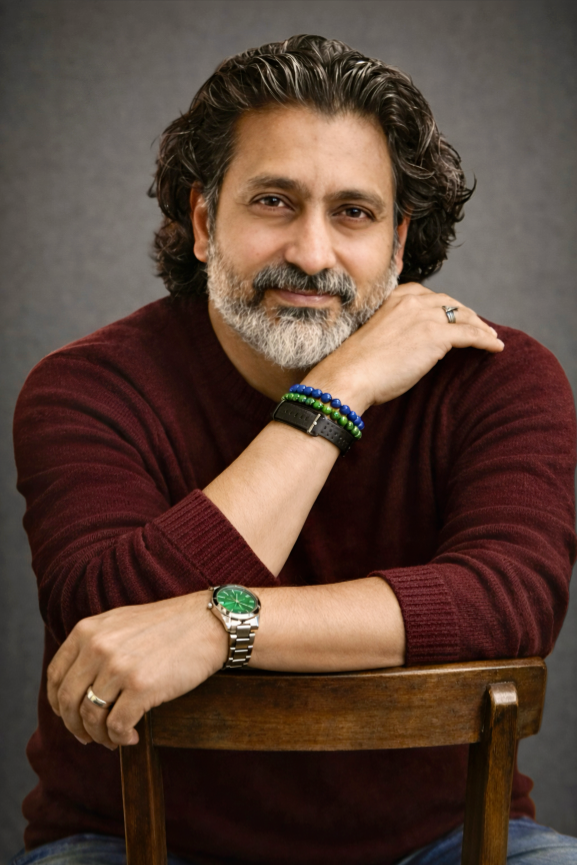
I am 46 years old. I think slowly and carefully, which people sometimes mistake for hesitation. It isn’t. The quality of a decision is almost entirely determined by the quality of the thinking that preceded it — and most people skip the thinking because they’ve confused speed with intelligence.
I believe relationships are the most underrated domain of human performance. Most people invest enormous energy in professional development and almost no structured attention in the quality of their closest connections — which is where most of their joy or most of their pain actually originates.
I have long friendships. The kind that have survived difficult conversations, different life phases, and the kind of honesty that most relationships can’t hold. The quality of a person’s long-term relationships is one of the most reliable indicators of their capacity for genuine depth. And depth is what this work requires.
I left a global corporate career in 2024. Not because it was failing. Because I had become more certain than I’d ever been about what I was actually here to do — and it was this.
The biggest mistake in this kind of work is starting in the wrong place for the wrong reason. Before I point you anywhere — answer these questions. Not the way you’d answer them on a form. The way you’d answer them at 6am when no one is watching.
Share your answers and I will tell you precisely where to start. Practical, honest — a human one.
Write to Prasoon →For mid-career professionals navigating purpose questions, those experiencing identity shifts, seeking inner alignment after loss or change, or anyone who has arrived at the honest question: Is this the life I actually want?
Start: Crossroads Clarity Map →For couples experiencing relational strain or growing distance. For parents navigating the particular challenge of teenagers in a high-pressure world — adolescent burnout, identity crises, and the communication gap that opens when a child stops sharing.
Start: Relationship Reality Check →For leaders who’ve stopped growing in the direction that matters, and for founders whose businesses are ready for the next version but aren’t sure the person running them is. Begins with an honest diagnosis — not a flattering one.
Start: Leadership Energy Audit →For HR leaders, L&D heads, and C-suite executives looking for something beyond training — real enabling for their teams, their leaders, or their organisation as a whole.
Start: Direct scoping conversation →One-page framework for anyone in transition. Download instantly.
Download FreeIdentifies your specific pattern of stuckness. Not a category — yours.
Take AssessmentOne letter. One real idea. One practice. Every week.
Subscribe FreeTools that produce an honest answer, not a comfortable one. Free — requires only your email.
Six patterns of non-movement. This tells you which one is yours — which changes the entire approach.
One-page framework for anyone in transition. Not a plan — a map of the terrain before you move.
Where is your leadership energy going? Surfaces what most 360-degree reviews won’t.
10 honest questions for any partnership feeling the strain — practically useful, non-clinical.
A structured guide for parents navigating communication breakdown with their adolescent.
Which of the six T.H.R.I.V.E. qualities needs the most attention right now?
 Launch your Graphy